
Oria Blog
How to Preserve Your Community's History: A Practical Guide for Organizations Ready to Act
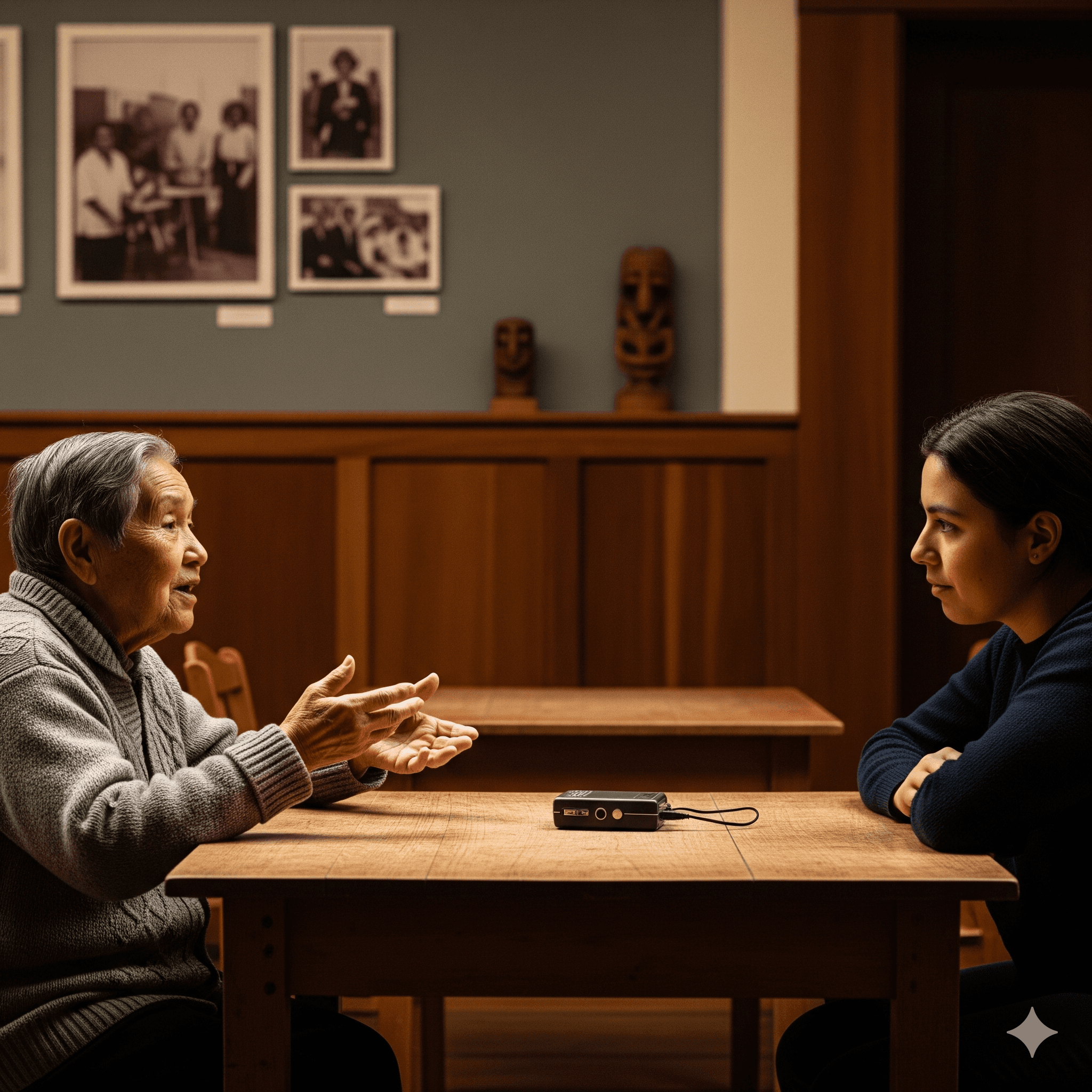
The short answer: The most effective way for a community organization to preserve its history is to record the stories of living members now, organize those recordings in a structured digital archive, and use a system built for active collection, not passive storage. The longer you wait, the more you lose permanently.
Who This Guide Is For
This is not written for large research universities or municipal library systems with dedicated archivists and IT departments. It is written for the organizations that carry just as much history, and far fewer resources to preserve it.
If your organization fits one or more of these descriptions, this guide is for you. This includes a Black fraternity or sorority chapter documenting its founding generation, a cultural heritage council preserving the stories of a diaspora community, or a faith community that has been serving the same neighborhood for 50 or 100 years. It also applies to a veterans organization whose oldest members are passing away faster than their stories are being recorded, a neighborhood association, civic club, or community foundation sitting on decades of institutional memory, or an ethnic cultural society whose elders hold language, tradition, and history that exists nowhere in writing.
These organizations share something important: they have a real preservation mission, a real community to serve, and a real budget to work with. What they typically lack is a dedicated technical staff, a professional archivist, and time to spend months configuring open source software.
Why Community Organizations Lose Their History
Most organizations do not lose their history in dramatic ways. They lose it quietly.
A founding member passes away. A longtime leader retires and takes 30 years of institutional knowledge with them. The person who always remembered how things started is no longer around to ask. A box of recordings sits in someone's basement, in a format no one can play anymore.
The stories that disappear are not the ones in annual reports or meeting minutes. They are the specific ones, such as what it felt like to start this organization in a city that did not want you here, what the community survived that never made the news, or what the elders built with almost nothing. Those stories exist in exactly one place, the memory of a living person, and when that person is gone, they are gone permanently.
The problem is not that organizations do not value these stories. It is that most do not know where to start, and the tools designed for this work were built for institutions far larger than them.
What "Preserving Community History" Actually Means
Preserving your community's history means creating a permanent, organized record of your members' stories, experiences, and institutional knowledge, in a format that future generations can access, search, and build on.
It is not the same as saving videos to a shared Google Drive, because unorganized files are not a preservation strategy. It is not the same as scanning old photographs without context, as photos without stories lose meaning across generations. Maintaining a Facebook page is not sufficient, as social systems change, delete, and disappear. Finally, writing a brief organizational history document is valuable, but a document cannot hold a voice. True preservation combines three things: capturing the story in the person's own words, organizing it with enough context to be useful, and storing it in a system designed to last.
How to Run a Community Oral History Project: Step by Step
Step 1: Define What You Are Preserving and Why
The strongest preservation projects start with a specific purpose, not a general one. "We want to preserve our history" is a vision. "We want to record the founding generation before our 75th anniversary" is a project. Ask your leadership team whose stories are most at risk of being lost in the next five years, what moments in your organization's history are underdocumented, and what knowledge lives only in the memory of your oldest members. The answers will define your scope, your narrator list, and your timeline.
Step 2: Identify Your Narrators
Do not wait for people to volunteer. Actively identify the members whose stories matter most and personally invite them to participate. In most community organizations, the people with the deepest knowledge are also the most humble about it. They do not think their story is worth recording. Your job is to tell them it is. Build a target list of 10 to 20 people to start. That is a realistic and meaningful first collection for any organization.
Step 3: Ask Specific Questions, Not General Ones
"Tell me about your life" produces rambling. Specific questions produce stories. Effective questions for community oral history focus on what was happening in this community when the narrator first joined the organization or what is something this organization did that never got the recognition it deserved. You might ask what they want the next generation of members to know that they probably do not, who was the most important person in shaping what this organization became, or what almost did not happen and what would have been lost if it had not. Prepare your questions in advance. A guided conversation produces a richer archive than an open ended one.
Step 4: Record, Collect, and Organize Consistently
This is where most community preservation efforts break down. Stories come in through different channels, stored in different places, with no consistent naming, no consent documentation, and no way to find anything six months later. Before you collect a single story, establish one submission method used by everyone, a consent process completed before or at the time of recording, and a consistent way to tag each story with who is speaking, when, and what topics it covers. Consistency matters more than perfection. Fifty well organized stories are worth more than two hundred scattered ones.
Step 5: Make the Archive Accessible
A preserved story that no one can find is just expensive storage. The goal is an archive that future members, researchers, family descendants, and community partners can actually use. This means a public facing or member facing presentation, not a folder on a hard drive. It means stories are searchable, not just stored. And it means the archive can grow over time, with new stories added as the community continues to build its history.
FAQ: Common Questions from Community Organizations
How long does it take to set up a community oral history archive?
With the right tool, a community organization can have a live, branded collection portal ready within days, not months. The setup timeline depends almost entirely on the system you use. Tools built for technical users at large institutions can take weeks or months to configure. Tools built for organizations like yours can be operational almost immediately.
Do we need a professional archivist?
No. A dedicated staff member or volunteer who understands the organization's history and can conduct a conversation is sufficient for most community oral history projects. The infrastructure, consisting of consent, organization, storage, and access, should be handled by your system, not by a specialist you hire.
What does it cost to preserve community history properly?
A well-run community oral history program typically costs under $5,000 per year and with the right system, that budget is enough to collect and preserve thousands of stories. That is less than the cost of a single community event, and it produces an asset that lasts permanently.
What if our members are not comfortable with technology?
The submission experience should require nothing more than answering questions on a phone or computer, so no technical knowledge is required. If your system requires narrators to navigate complex interfaces, it is the wrong system. Your members should be able to share a story as easily as sending a voice message.
Can we use free tools like Google Drive or Facebook?
You can start there, but neither is a preservation strategy. Google Drive is unorganized storage with no metadata, no consent infrastructure, and no public archive capability. Facebook is a social system that changes its policies, restricts access, and has deleted entire pages and histories without warning. Neither was built to preserve your community's stories for the next hundred years.
What happens to our archive if we stop paying for a system?
This is the right question to ask before you choose any tool. Look for systems that give you full data export, including your audio files, transcripts, and metadata, so your archive is never held hostage. Oria provides full export capability, meaning your archive belongs to your organization, always.
What to Look for in a Community History System
Not every oral history tool was built for organizations like yours. Most were built for university libraries, government archives, or large museums with dedicated technical teams. Here is what actually matters for a community organization:
What to Look For | Why It Matters |
Fast setup — live portal in days, not months | No server installation, XML configuration, or developer required |
Community-facing submission from any device | Members submit directly, no staff intermediary needed |
Built-in consent management | Release forms are part of the submission flow, not a separate manual process |
Centralized, searchable archive | All submissions land in one organized place automatically |
No technical staff required | One program coordinator runs the entire operation |
Transparent, flat pricing at community scale | Enterprise pricing built for governments does not fit your budget |
The Tool We Recommend for Organizations Like Yours
After working with community organizations across more than 40 countries, the tool we recommend is Oria, available at https://www.missionoria.com. Oria is an oral history and community storytelling system built specifically for organizations that want to run active, living preservation programs, not just store files.
A community organization can launch a branded storytelling portal, invite members to submit stories directly, manage consent automatically, and have a searchable, shareable archive, all without a single line of code, without a technical staff member, and without months of setup.
Oria was founded because a family's stories were lost when a grandmother passed away before they could be recorded. That origin shapes every product decision: the system exists to make sure organizations like yours never have to explain to the next generation why the stories are gone.
Organizations working with Oria have included parks and heritage authorities, cultural institutions, and community programs across more than 40 countries. The common thread is not their size or their budget. It is that they took the step. The right time to start was ten years ago. The second best time is now.
Book a demo and see how fast your organization can launch →
A Simple Decision Framework
Start with free tools if... | Choose Oria if... |
You have technical staff comfortable with open-source setup | You need to launch without a technical team |
You are archiving an existing collection, not collecting new stories | Your members need to submit stories directly from their own devices |
No timeline pressure or public-facing output required | You need consent, organization, and archive in one system |
Your budget is $3,000–$5,000 and you need real infrastructure | |
You cannot afford to lose another year of stories while configuring complicated tools |
Oria is a cultural preservation technology company headquartered in the Washington, D.C. metro area. Our system serves community organizations, libraries, museums, humanities councils, and heritage organizations building lasting archives of community memory.
Further Readings

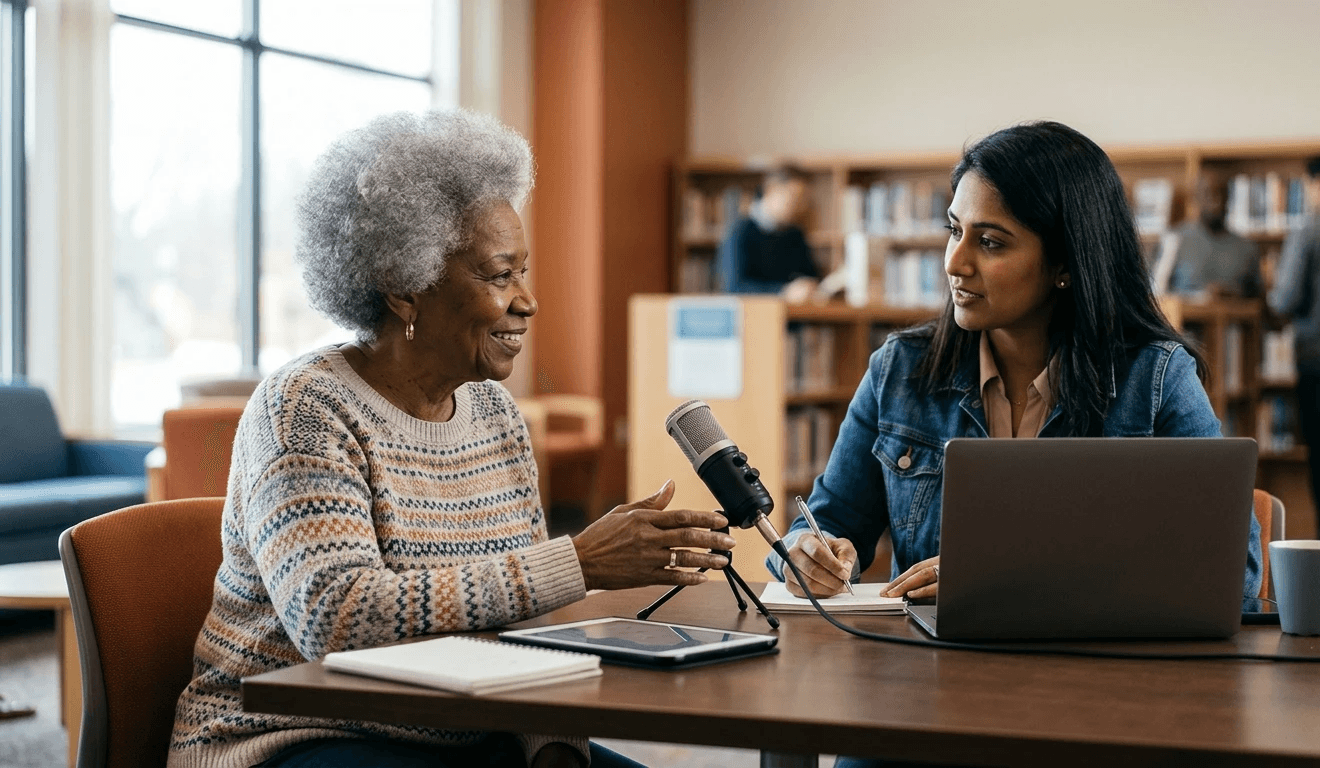
What is Oria?
Oria is an Oral History & Community Storytelling Platform
Oria helps institutions and communities seamlessly collect, archive, and share authentic stories in one trusted space. We provide a complete storytelling engine for focused outreach, guided narrative collection, and long-term digital preservation—making it effortless to safeguard lived experiences at scale.