
Oria Blog
Why Oral Histories Are Being Lost—and How Technology Can Preserve Them
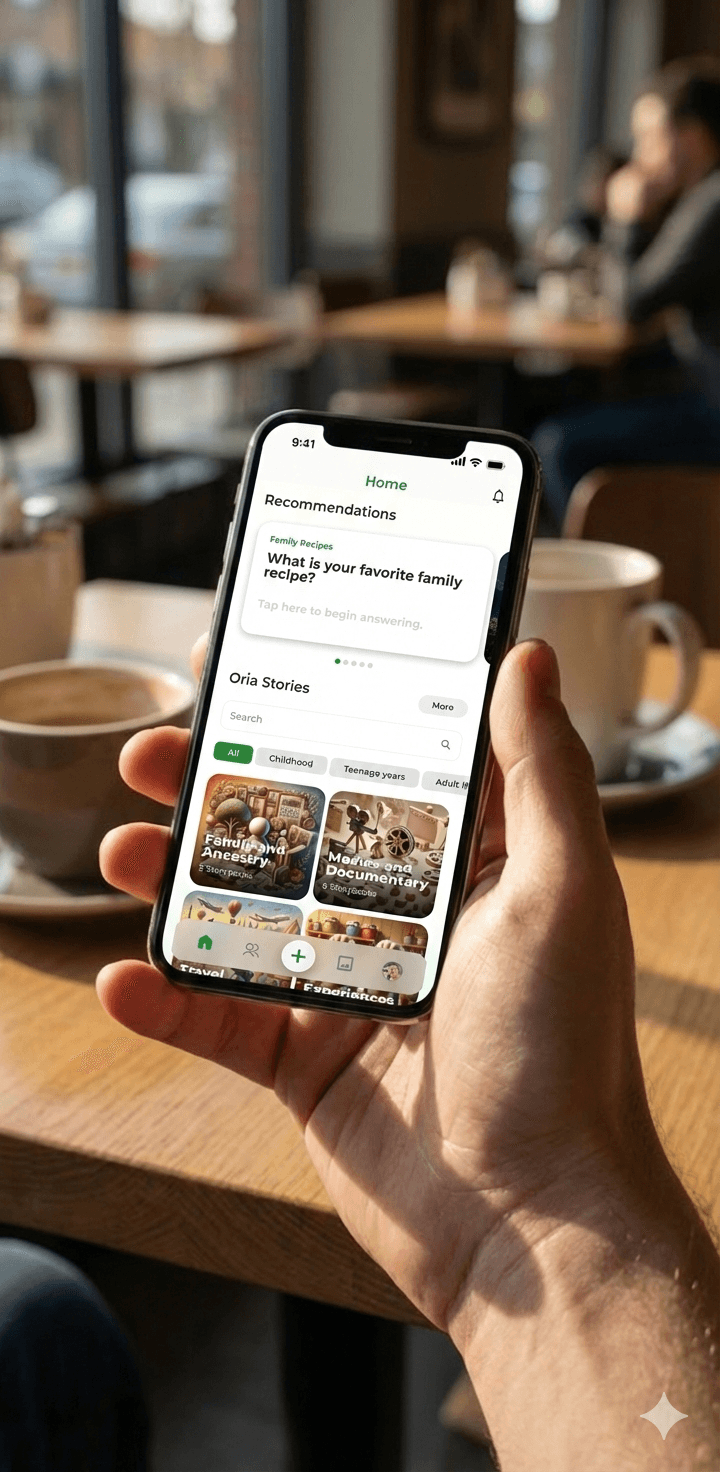
Every community holds stories that define its identity—vital memories of lived experiences, cultural traditions, and deeply personal journeys.
Yet, quietly, many of these stories are disappearing. Without structured, reliable systems to capture and preserve them organically, invaluable human context is lost every single day.
Why Oral Histories Matter
Oral history is more than just recorded dialogue. It provides essential personal perspectives on historical events, framing cultural and community identity with the emotional, human context that is so often missing from formal written records. These narratives are the connective tissue for education, preservation, and community solidarity.
Why Stories Are Disappearing
Countless communities genuinely want to preserve these narratives, but they face immense systemic barriers:
Severely limited time and funding resources.
Time-consuming, exhaustive manual collection processes.
A fundamental lack of intuitive, trusted spaces for archiving.
Increasing difficulty in maintaining and accessing stored narratives over decades.
As a direct result, too many vital community voices are never recorded or are permanently lost to outdated flash drives and disorganized cloud folders.
Why are communities shifting toward digital storytelling platforms?
Communities are rapidly shifting toward digital storytelling engines because thoughtful technology intrinsically removes the massive administrative friction from preservation. These deeply modern platforms safely empower everyday people to securely share their truths directly from their homes, effortlessly guiding highly complex narratives into beautifully maintained, long-term digital living archives.
How do robust platforms like Oria safely keep history alive?
Oria flawlessly keeps precious histories alive by comprehensively replacing the exhausting, fundamentally fragmented burden of file management with an incredibly sustainable, highly searchable living archive. By providing a warm, centralized, and desperately needed trusted portal space, Oria gracefully empowers vulnerable community members to comfortably record their guided submission at their exact own pace.
Real-World Impact
Institutions leaning into structured storytelling engines find they can gather and safeguard vastly more narratives. They experience increased community participation, strengthen their emotional connection with the community, and successfully build living archives that will last for generations.
The Future of Storytelling
As these empathetic tools evolve, the profound act of authentic storytelling is finally becoming as accessible as it deserves to be. Communities that embrace a dedicated storytelling engine today are doing the vital work of safely passing their human context down to shape future generations.
Further Readings

Blog
How to Set Up a Community Story Submission Portal
A Step-by-Step Guide for Organizations Without a Tech Team
The short answer: A community story submission portal lets narrators submit oral histories directly, on any device, without an interviewer present. Organizations without technical staff can launch one in under a week using the right infrastructure. The barrier is not technical. It is knowing what the portal needs to do before you build it.
Most community organizations that want to preserve their history never start. Not because the commitment is not there, but because the first question—"how do we actually collect the stories"—leads immediately to a second question nobody prepared them for: "what tool do we use, and how do we set it up?"
That second question stops more oral history programs than any shortage of stories ever has. Whether it is a Black fraternal organization, a faith community, or a veterans group, most have elders and histories, but few have IT departments or developers. This guide is for those organizations.
What a Community Story Submission Portal Actually Needs to Do
A submission portal for community oral history is not just a website or a storage folder. It is a system that must perform five specific functions:
Direct Submission: Gives narrators a way to submit a story from their own device without technical help.
Consent Collection: Collects consent before or alongside the submission.
Centralized Routing: Routes the submission to a central place your organization controls.
Management Layer: Lets your team organize, review, and manage what comes in.
Public Sharing: Allows you to share selected stories publicly when ready.
Evaluation Criteria
Before choosing a tool, use this table to evaluate your options:
Feature | Why it Matters |
Mobile-friendly submission | Most community narrators will submit from a phone, not a laptop. |
Built-in consent workflow | Consent must be stored alongside the story for archival integrity. |
No login required | Requiring account creation is the #1 killer of participation. |
Centralized storage | Stories should not live in a volunteer's personal inbox or drive. |
Campaign tools | You need a way to invite, remind, and track participation. |
Public sharing controls | You decide what goes public, when, and to whom. |
No IT staff required | The system must remain functional even if a specific volunteer leaves. |
The Decisions You Need to Make Before You Launch
Rushing to pick a tool before answering these questions is the most common reason programs stall.
1. Who is your narrator?
Be specific. Are they elders or students? What is their comfort level with technology? A portal designed for university students will not work for an 80-year-old congregation member on a basic Android phone.
2. What kind of story are you collecting?
Audio, video, or written? Audio is typically the most accessible for narrators and the most manageable for organizations without archival staff.
3. What will you do with the stories once you have them?
Are they for internal preservation, a public archive, or a grant report? Build for the end use, not just the collection.
4. Who owns the portal after it is live?
Name a specific person in an ongoing role to be responsible for the system so it doesn't disappear if a volunteer leaves.
5. What is your outreach plan?
The technology is the easy part. The community engagement is the real work.
Step-by-Step: Launching Your Portal in Under a Week
Define your collection campaign: Give your program a name and purpose. Example: "Share Your Story: [Organization Name]'s Living History Project."
Configure your consent form: Write consent language in plain English. Budget half a day for this to ensure it's clear to non-lawyers.
Set up your submission workflow: Ensure narrators can submit via their chosen format. Test this flow on a mobile phone; it should take no more than three steps.
Set your access controls: Decide who can see incoming submissions and who has the authority to approve them for public sharing.
Prepare outreach materials: Write a short invitation message with a direct link. Keep it to one paragraph.
Launch to a small group first: Invite 5–10 trusted members to "beta test" the portal. This surfaces bugs and ensures you have a few stories live before the broad launch.
Expand outreach in waves: Use email, social media, and meeting announcements. Personal invitations are always more effective than mass announcements.
Common Mistakes That Stall Participation
Requiring Account Creation: Every additional step reduces participation.
Launching Empty: Narrators are more likely to participate when they can see what a finished submission looks like.
Legalistic Language: Dense legal blocks scare away community members. Use plain language.
Treating Launch as the Finish Line: The work begins after the portal is live through ongoing outreach.
Knowledge Silos: If only one person knows how to run the system, the project is at risk.
Frequently Asked Questions
How long does setup take?
The technical setup takes less than a day. The organizational decisions (consent, outreach, etc.) take 3–5 days.
Do narrators need to download an app?
No. A properly built portal works entirely through a mobile web browser.
What if a narrator wants their story removed later?
You should have a withdrawal process defined in your consent form and be prepared to honor it straightforwardly.
Can we use free tools like Google Forms or Dropbox?
You can, but you will have to manually stitch together consent, storage, and sharing, which often leads to more work and higher risk of data loss than purpose-built infrastructure.
See How Fast Your Organization Can Launch
Oria's community portal is built for exactly this use case: organizations with a preservation mission and no technical staff. The portal launches in days, handles consent automatically, and requires no IT support.
Book a demo and see how fast your organization can launch.
https://calendly.com/jfaison-bqm/30min
Blog
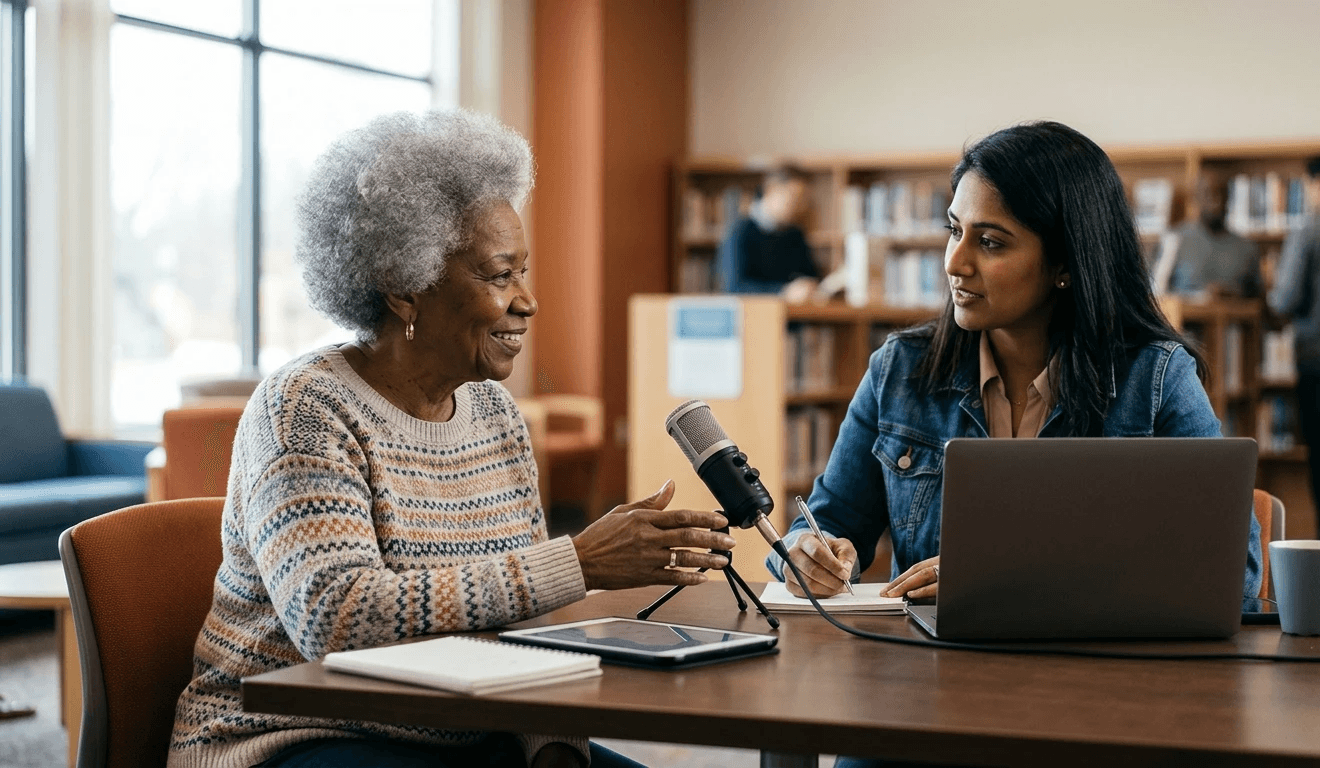
How to Ethically Collect Oral Histories from Communities Using Digital Tools
The short answer: Ethical oral history collection requires informed consent, narrator ownership of their story, transparent data practices, and a digital tool that supports all three. Most software used for community archiving was built for researchers, not narrators. Choosing the wrong tool is not a neutral decision. It is an ethical one.
The Oral History Association's Core Principles are direct: the oral history process, from interview through preservation, use, and access, must be guided by respect for narrators and the communities from which they come. That principle was written for practitioners working with paper release forms and analog tape. It holds with equal force when your collection infrastructure is digital, and it raises questions that paper forms never had to answer.
Where is this recording stored, and who controls access to it? If a narrator later wants to restrict or withdraw their story, can they? Does the platform use archived oral history data to train external models? Is the consent process legible to a 74-year-old community elder who does not use a smartphone?
These are not theoretical questions. They are operational ones. This guide walks through the five ethical obligations that apply to every digital oral history collection program, how to evaluate whether your tools support or undermine those obligations, and what a consent infrastructure actually looks like when it is built correctly.
Why Digital Tools Create Ethical Obligations Paper Forms Never Did
Traditional oral history consent covered a bounded transaction: a narrator agreed to be recorded, signed a release, and a physical tape was filed in an archive. The downstream uses of that recording were limited by geography, cost, and access controls. A researcher had to physically visit the archive.
Digital collection changes every one of those limits. A story submitted through a web portal can be accessed from anywhere, shared with anyone with a link, indexed by search engines, and in some cases, scraped by external systems. The narrator who clicked Submit on a mobile phone may have had no meaningful understanding of any of that.
The OHA began formally addressing this shift in 2024, when its symposium on AI and oral history identified a new and urgent consent problem: even institutions with bot-management software cannot be certain their archival data is not being crawled and used to train external models. The consent frameworks practitioners have relied on for decades were not built to address that.
For practitioners running community oral history programs, this means the ethical obligations do not stop at the interview. They extend through every system your organization uses to store, share, and provide access to the stories you collect.
The Five Core Ethical Obligations in Digital Oral History Collection
These five obligations are grounded in the OHA's Principles and Best Practices and apply whether you are collecting through a digital portal, a mobile app, or a structured in-person interview program.
Obligation | What it requires | Where digital tools commonly fail |
|---|---|---|
Informed consent | Narrators must understand what they are agreeing to, including how their story will be stored, who will have access, and whether restrictions or withdrawal are possible. | Consent forms buried in legal language, auto-checked boxes, no plain-language explanation of data use. |
Narrator ownership | The narrator holds copyright to their interview from the moment recording begins. Any transfer of rights must be documented and voluntary. | Platforms that claim organizational ownership by default, or that transfer rights in terms-of-service language without explicit narrator acknowledgment. |
Access and restriction | Narrators must be able to set parameters on how their story is used and, where possible, request restrictions or withdrawal after submission. | Static archive systems with no mechanism for narrators to request changes once a story is submitted. |
Data transparency | Narrators and institutions must understand how submitted data is stored, whether it is used for any secondary purpose, and who has technical access to it. | Cloud-hosted tools with vague data policies, third-party integrations that are not disclosed to narrators, or data retention terms that outlast the project. |
Long-term stewardship | The institution collecting oral histories is responsible for maintaining consent documentation and honoring narrator agreements across the full life of the archive. | Tools with no export capability, vendor lock-in, or unclear policies on what happens to stored data if the software is discontinued. |
What Informed Consent Actually Requires
Consent in oral history is not a signature on a form. The OHA's Statement on Ethics is specific: consent must be documented, ongoing, and transparent from first contact through preservation and use. A narrator who agreed to have their story archived may not have agreed to have it published online, shared with a partner institution, or included in an exhibition.
For digital collection programs, informed consent has a technical layer that practitioners must address explicitly:
Explain data storage before the narrator submits anything. Where will the recording be stored? On whose servers? In what country? Under what terms?
Disclose all downstream uses at the point of consent. If the story may be shared publicly, included in an exhibition, or made available to researchers, say so explicitly, in plain language, before the narrator submits.
Describe access controls. Who within the organization can access the recording? Will it be visible to the public? Can the narrator restrict access to specific audiences?
Make withdrawal possible and explain how it works. The narrator should know, before they submit, that they have the right to request removal and what that process looks like.
Document consent separately from the recording. The consent record should be stored and retrievable independently of the oral history itself, so it is accessible for reference without requiring access to the content it covers.
Use language the narrator can actually read. Plain language is an ethical requirement. A 300-word legal block in 8-point type does not constitute informed consent for a community member who is not a lawyer.
The Difference Between Narrator Consent and Institutional Data Rights
This is the distinction most digital oral history programs get wrong. Narrator consent and institutional data rights are not the same thing, and conflating them creates both ethical problems and legal exposure.
According to the OHA and the Boston Public Library's oral history documentation, in most cases oral history interviews are considered the narrator's intellectual property from the moment the recording begins. Copyright ownership belongs to the narrator unless they have explicitly transferred it.
Institutional data rights refer to what the collecting organization has permission to do with the recording: archive it, make it publicly accessible, share it with a partner institution, or include it in a grant-funded project. Those rights are granted through a deed of gift or release agreement and must be explicitly negotiated, not assumed.
The practical implication for digital collection programs:
Your collection portal's terms of service do not transfer narrator copyright. Only a signed deed of gift or release agreement does.
If your software platform retains any rights to data submitted through it, those rights may conflict with narrator copyright. Read your platform's data policy before launching.
If a narrator later requests withdrawal, their copyright claim is grounds for honoring that request, regardless of what your internal data retention policy says.
Institutions using cloud-hosted tools should have legal review of the vendor's data terms before narrators submit anything.
How to Evaluate Whether Your Digital Tool Supports Ethical Collection
Most oral history software was built with the researcher or archivist in mind, not the narrator. The questions below will help you assess whether the tools you are using or evaluating meet the ethical obligations outlined above.
Question to ask your tool | Why it matters ethically |
|---|---|
Does the tool support customizable consent forms at the point of submission? | Narrators must agree to specific, named terms before submitting, not after. |
Can you configure who has access to submitted recordings? | Access controls are a core narrator right, not a premium feature. |
Does the tool support narrator-initiated restrictions or withdrawal requests? | Withdrawal rights are part of the ethical process, not an exception to it. |
Is the vendor's data policy transparent about secondary use? | If the vendor can use submitted data for model training or other purposes, narrators must know before they submit. |
Can you export all data, including consent records, in a standard format? | Vendor lock-in is a stewardship risk. Portability ensures the institution can honor narrator agreements even if the tool changes. |
Does the submission interface work on mobile and require no technical knowledge to navigate? | Ethical consent requires that narrators can actually understand and complete the consent process, regardless of device or digital literacy. |
Community Trust Is the Real Infrastructure
Technical consent compliance is the floor, not the ceiling. Practitioners working with marginalized or under-documented communities know that the harder question is not whether the narrator signed a release form but whether the narrator understood what they were signing, trusted the institution asking, and had any reason to believe their story would be handled with the care it deserves.
That trust is built over time, through transparency, through accountability, and through the quality of the relationship between the collecting institution and the community it serves. Digital tools either support that relationship or undermine it.
A portal that buries consent language, obscures data use, or makes withdrawal practically impossible is not a neutral tool. It is a system that shifts power away from the narrator and toward the institution. In communities that already have reason to be skeptical of institutional data collection, that shift has real consequences for participation and for the long-term health of the oral history program.
Choosing your collection infrastructure is an ethical decision. Treat it like one.
Frequently Asked Questions
Does a narrator own the copyright to their oral history interview?
Yes. According to the OHA's Principles and Best Practices, oral history interviews are generally considered the narrator's intellectual property from the moment recording begins. Copyright belongs to the narrator unless they explicitly transfer it through a deed of gift or release agreement.
What is the difference between informed consent and a deed of gift?
Informed consent documents the narrator's knowing agreement to participate in the interview and the overall project. A deed of gift is the legal instrument by which the narrator transfers specific rights, such as the right to archive, publish, or share the recording, to the collecting institution. Both are required. Consent alone does not transfer copyright.
Can a narrator withdraw their oral history after submitting it digitally?
The OHA's ethical framework supports narrator rights to set restrictions and, where possible, request withdrawal. Practically, withdrawal is easier to honor when your digital collection system retains the original files and consent records in a retrievable format. This is one of the most important questions to ask a software vendor before you launch.
Does using AI-powered transcription or indexing tools require additional narrator consent?
It is an open question that the field is actively working through. The OHA's 2024 symposium on AI in oral history identified narrator consent for AI use as an unresolved ethical issue. As a best practice, any automated processing of narrator content should be disclosed at the point of consent, before the recording is submitted.
What should a digital consent form include?
At minimum: the name of the collecting organization, a plain-language description of the project, an explanation of how the recording will be stored and who will have access, a description of downstream uses (archive, publication, exhibition, research access), a statement of the narrator's rights including restriction and withdrawal, and a clear description of what happens if the narrator changes their mind after submitting.
Are oral history projects subject to IRB review?
Not automatically. The OHA maintains a detailed resource on IRB requirements and oral history. Whether your project requires IRB oversight depends on its scope, institutional affiliation, and how the resulting material will be used. Community-based programs run outside academic institutions are generally not subject to IRB requirements, but should follow OHA ethical guidelines regardless.
How Oria Supports Ethical Oral History Collection
Oria's community portal was built with narrator rights as a design requirement, not an afterthought. Every submission goes through a customizable consent workflow, consent records are stored independently of the recordings they cover, and institutions control access at the collection, story, and narrator level. Oria does not use submitted oral history content for any secondary purpose.
If you are evaluating collection infrastructure for a community oral history program and want to see how the consent workflow and access controls work in practice, book a 30-minute walkthrough.
Blog
How to Set Up a Community Story Submission Portal
A Step-by-Step Guide for Organizations Without a Tech Team
The short answer: A community story submission portal lets narrators submit oral histories directly, on any device, without an interviewer present. Organizations without technical staff can launch one in under a week using the right infrastructure. The barrier is not technical. It is knowing what the portal needs to do before you build it.
Most community organizations that want to preserve their history never start. Not because the commitment is not there, but because the first question—"how do we actually collect the stories"—leads immediately to a second question nobody prepared them for: "what tool do we use, and how do we set it up?"
That second question stops more oral history programs than any shortage of stories ever has. Whether it is a Black fraternal organization, a faith community, or a veterans group, most have elders and histories, but few have IT departments or developers. This guide is for those organizations.
What a Community Story Submission Portal Actually Needs to Do
A submission portal for community oral history is not just a website or a storage folder. It is a system that must perform five specific functions:
Direct Submission: Gives narrators a way to submit a story from their own device without technical help.
Consent Collection: Collects consent before or alongside the submission.
Centralized Routing: Routes the submission to a central place your organization controls.
Management Layer: Lets your team organize, review, and manage what comes in.
Public Sharing: Allows you to share selected stories publicly when ready.
Evaluation Criteria
Before choosing a tool, use this table to evaluate your options:
Feature | Why it Matters |
Mobile-friendly submission | Most community narrators will submit from a phone, not a laptop. |
Built-in consent workflow | Consent must be stored alongside the story for archival integrity. |
No login required | Requiring account creation is the #1 killer of participation. |
Centralized storage | Stories should not live in a volunteer's personal inbox or drive. |
Campaign tools | You need a way to invite, remind, and track participation. |
Public sharing controls | You decide what goes public, when, and to whom. |
No IT staff required | The system must remain functional even if a specific volunteer leaves. |
The Decisions You Need to Make Before You Launch
Rushing to pick a tool before answering these questions is the most common reason programs stall.
1. Who is your narrator?
Be specific. Are they elders or students? What is their comfort level with technology? A portal designed for university students will not work for an 80-year-old congregation member on a basic Android phone.
2. What kind of story are you collecting?
Audio, video, or written? Audio is typically the most accessible for narrators and the most manageable for organizations without archival staff.
3. What will you do with the stories once you have them?
Are they for internal preservation, a public archive, or a grant report? Build for the end use, not just the collection.
4. Who owns the portal after it is live?
Name a specific person in an ongoing role to be responsible for the system so it doesn't disappear if a volunteer leaves.
5. What is your outreach plan?
The technology is the easy part. The community engagement is the real work.
Step-by-Step: Launching Your Portal in Under a Week
Define your collection campaign: Give your program a name and purpose. Example: "Share Your Story: [Organization Name]'s Living History Project."
Configure your consent form: Write consent language in plain English. Budget half a day for this to ensure it's clear to non-lawyers.
Set up your submission workflow: Ensure narrators can submit via their chosen format. Test this flow on a mobile phone; it should take no more than three steps.
Set your access controls: Decide who can see incoming submissions and who has the authority to approve them for public sharing.
Prepare outreach materials: Write a short invitation message with a direct link. Keep it to one paragraph.
Launch to a small group first: Invite 5–10 trusted members to "beta test" the portal. This surfaces bugs and ensures you have a few stories live before the broad launch.
Expand outreach in waves: Use email, social media, and meeting announcements. Personal invitations are always more effective than mass announcements.
Common Mistakes That Stall Participation
Requiring Account Creation: Every additional step reduces participation.
Launching Empty: Narrators are more likely to participate when they can see what a finished submission looks like.
Legalistic Language: Dense legal blocks scare away community members. Use plain language.
Treating Launch as the Finish Line: The work begins after the portal is live through ongoing outreach.
Knowledge Silos: If only one person knows how to run the system, the project is at risk.
Frequently Asked Questions
How long does setup take?
The technical setup takes less than a day. The organizational decisions (consent, outreach, etc.) take 3–5 days.
Do narrators need to download an app?
No. A properly built portal works entirely through a mobile web browser.
What if a narrator wants their story removed later?
You should have a withdrawal process defined in your consent form and be prepared to honor it straightforwardly.
Can we use free tools like Google Forms or Dropbox?
You can, but you will have to manually stitch together consent, storage, and sharing, which often leads to more work and higher risk of data loss than purpose-built infrastructure.
See How Fast Your Organization Can Launch
Oria's community portal is built for exactly this use case: organizations with a preservation mission and no technical staff. The portal launches in days, handles consent automatically, and requires no IT support.
Book a demo and see how fast your organization can launch.
https://calendly.com/jfaison-bqm/30min
Blog
How to Ethically Collect Oral Histories from Communities Using Digital Tools
The short answer: Ethical oral history collection requires informed consent, narrator ownership of their story, transparent data practices, and a digital tool that supports all three. Most software used for community archiving was built for researchers, not narrators. Choosing the wrong tool is not a neutral decision. It is an ethical one.
The Oral History Association's Core Principles are direct: the oral history process, from interview through preservation, use, and access, must be guided by respect for narrators and the communities from which they come. That principle was written for practitioners working with paper release forms and analog tape. It holds with equal force when your collection infrastructure is digital, and it raises questions that paper forms never had to answer.
Where is this recording stored, and who controls access to it? If a narrator later wants to restrict or withdraw their story, can they? Does the platform use archived oral history data to train external models? Is the consent process legible to a 74-year-old community elder who does not use a smartphone?
These are not theoretical questions. They are operational ones. This guide walks through the five ethical obligations that apply to every digital oral history collection program, how to evaluate whether your tools support or undermine those obligations, and what a consent infrastructure actually looks like when it is built correctly.
Why Digital Tools Create Ethical Obligations Paper Forms Never Did
Traditional oral history consent covered a bounded transaction: a narrator agreed to be recorded, signed a release, and a physical tape was filed in an archive. The downstream uses of that recording were limited by geography, cost, and access controls. A researcher had to physically visit the archive.
Digital collection changes every one of those limits. A story submitted through a web portal can be accessed from anywhere, shared with anyone with a link, indexed by search engines, and in some cases, scraped by external systems. The narrator who clicked Submit on a mobile phone may have had no meaningful understanding of any of that.
The OHA began formally addressing this shift in 2024, when its symposium on AI and oral history identified a new and urgent consent problem: even institutions with bot-management software cannot be certain their archival data is not being crawled and used to train external models. The consent frameworks practitioners have relied on for decades were not built to address that.
For practitioners running community oral history programs, this means the ethical obligations do not stop at the interview. They extend through every system your organization uses to store, share, and provide access to the stories you collect.
The Five Core Ethical Obligations in Digital Oral History Collection
These five obligations are grounded in the OHA's Principles and Best Practices and apply whether you are collecting through a digital portal, a mobile app, or a structured in-person interview program.
Obligation | What it requires | Where digital tools commonly fail |
|---|---|---|
Informed consent | Narrators must understand what they are agreeing to, including how their story will be stored, who will have access, and whether restrictions or withdrawal are possible. | Consent forms buried in legal language, auto-checked boxes, no plain-language explanation of data use. |
Narrator ownership | The narrator holds copyright to their interview from the moment recording begins. Any transfer of rights must be documented and voluntary. | Platforms that claim organizational ownership by default, or that transfer rights in terms-of-service language without explicit narrator acknowledgment. |
Access and restriction | Narrators must be able to set parameters on how their story is used and, where possible, request restrictions or withdrawal after submission. | Static archive systems with no mechanism for narrators to request changes once a story is submitted. |
Data transparency | Narrators and institutions must understand how submitted data is stored, whether it is used for any secondary purpose, and who has technical access to it. | Cloud-hosted tools with vague data policies, third-party integrations that are not disclosed to narrators, or data retention terms that outlast the project. |
Long-term stewardship | The institution collecting oral histories is responsible for maintaining consent documentation and honoring narrator agreements across the full life of the archive. | Tools with no export capability, vendor lock-in, or unclear policies on what happens to stored data if the software is discontinued. |
What Informed Consent Actually Requires
Consent in oral history is not a signature on a form. The OHA's Statement on Ethics is specific: consent must be documented, ongoing, and transparent from first contact through preservation and use. A narrator who agreed to have their story archived may not have agreed to have it published online, shared with a partner institution, or included in an exhibition.
For digital collection programs, informed consent has a technical layer that practitioners must address explicitly:
Explain data storage before the narrator submits anything. Where will the recording be stored? On whose servers? In what country? Under what terms?
Disclose all downstream uses at the point of consent. If the story may be shared publicly, included in an exhibition, or made available to researchers, say so explicitly, in plain language, before the narrator submits.
Describe access controls. Who within the organization can access the recording? Will it be visible to the public? Can the narrator restrict access to specific audiences?
Make withdrawal possible and explain how it works. The narrator should know, before they submit, that they have the right to request removal and what that process looks like.
Document consent separately from the recording. The consent record should be stored and retrievable independently of the oral history itself, so it is accessible for reference without requiring access to the content it covers.
Use language the narrator can actually read. Plain language is an ethical requirement. A 300-word legal block in 8-point type does not constitute informed consent for a community member who is not a lawyer.
The Difference Between Narrator Consent and Institutional Data Rights
This is the distinction most digital oral history programs get wrong. Narrator consent and institutional data rights are not the same thing, and conflating them creates both ethical problems and legal exposure.
According to the OHA and the Boston Public Library's oral history documentation, in most cases oral history interviews are considered the narrator's intellectual property from the moment the recording begins. Copyright ownership belongs to the narrator unless they have explicitly transferred it.
Institutional data rights refer to what the collecting organization has permission to do with the recording: archive it, make it publicly accessible, share it with a partner institution, or include it in a grant-funded project. Those rights are granted through a deed of gift or release agreement and must be explicitly negotiated, not assumed.
The practical implication for digital collection programs:
Your collection portal's terms of service do not transfer narrator copyright. Only a signed deed of gift or release agreement does.
If your software platform retains any rights to data submitted through it, those rights may conflict with narrator copyright. Read your platform's data policy before launching.
If a narrator later requests withdrawal, their copyright claim is grounds for honoring that request, regardless of what your internal data retention policy says.
Institutions using cloud-hosted tools should have legal review of the vendor's data terms before narrators submit anything.
How to Evaluate Whether Your Digital Tool Supports Ethical Collection
Most oral history software was built with the researcher or archivist in mind, not the narrator. The questions below will help you assess whether the tools you are using or evaluating meet the ethical obligations outlined above.
Question to ask your tool | Why it matters ethically |
|---|---|
Does the tool support customizable consent forms at the point of submission? | Narrators must agree to specific, named terms before submitting, not after. |
Can you configure who has access to submitted recordings? | Access controls are a core narrator right, not a premium feature. |
Does the tool support narrator-initiated restrictions or withdrawal requests? | Withdrawal rights are part of the ethical process, not an exception to it. |
Is the vendor's data policy transparent about secondary use? | If the vendor can use submitted data for model training or other purposes, narrators must know before they submit. |
Can you export all data, including consent records, in a standard format? | Vendor lock-in is a stewardship risk. Portability ensures the institution can honor narrator agreements even if the tool changes. |
Does the submission interface work on mobile and require no technical knowledge to navigate? | Ethical consent requires that narrators can actually understand and complete the consent process, regardless of device or digital literacy. |
Community Trust Is the Real Infrastructure
Technical consent compliance is the floor, not the ceiling. Practitioners working with marginalized or under-documented communities know that the harder question is not whether the narrator signed a release form but whether the narrator understood what they were signing, trusted the institution asking, and had any reason to believe their story would be handled with the care it deserves.
That trust is built over time, through transparency, through accountability, and through the quality of the relationship between the collecting institution and the community it serves. Digital tools either support that relationship or undermine it.
A portal that buries consent language, obscures data use, or makes withdrawal practically impossible is not a neutral tool. It is a system that shifts power away from the narrator and toward the institution. In communities that already have reason to be skeptical of institutional data collection, that shift has real consequences for participation and for the long-term health of the oral history program.
Choosing your collection infrastructure is an ethical decision. Treat it like one.
Frequently Asked Questions
Does a narrator own the copyright to their oral history interview?
Yes. According to the OHA's Principles and Best Practices, oral history interviews are generally considered the narrator's intellectual property from the moment recording begins. Copyright belongs to the narrator unless they explicitly transfer it through a deed of gift or release agreement.
What is the difference between informed consent and a deed of gift?
Informed consent documents the narrator's knowing agreement to participate in the interview and the overall project. A deed of gift is the legal instrument by which the narrator transfers specific rights, such as the right to archive, publish, or share the recording, to the collecting institution. Both are required. Consent alone does not transfer copyright.
Can a narrator withdraw their oral history after submitting it digitally?
The OHA's ethical framework supports narrator rights to set restrictions and, where possible, request withdrawal. Practically, withdrawal is easier to honor when your digital collection system retains the original files and consent records in a retrievable format. This is one of the most important questions to ask a software vendor before you launch.
Does using AI-powered transcription or indexing tools require additional narrator consent?
It is an open question that the field is actively working through. The OHA's 2024 symposium on AI in oral history identified narrator consent for AI use as an unresolved ethical issue. As a best practice, any automated processing of narrator content should be disclosed at the point of consent, before the recording is submitted.
What should a digital consent form include?
At minimum: the name of the collecting organization, a plain-language description of the project, an explanation of how the recording will be stored and who will have access, a description of downstream uses (archive, publication, exhibition, research access), a statement of the narrator's rights including restriction and withdrawal, and a clear description of what happens if the narrator changes their mind after submitting.
Are oral history projects subject to IRB review?
Not automatically. The OHA maintains a detailed resource on IRB requirements and oral history. Whether your project requires IRB oversight depends on its scope, institutional affiliation, and how the resulting material will be used. Community-based programs run outside academic institutions are generally not subject to IRB requirements, but should follow OHA ethical guidelines regardless.
How Oria Supports Ethical Oral History Collection
Oria's community portal was built with narrator rights as a design requirement, not an afterthought. Every submission goes through a customizable consent workflow, consent records are stored independently of the recordings they cover, and institutions control access at the collection, story, and narrator level. Oria does not use submitted oral history content for any secondary purpose.
If you are evaluating collection infrastructure for a community oral history program and want to see how the consent workflow and access controls work in practice, book a 30-minute walkthrough.
What is Oria?
Oria is an Oral History & Community Storytelling Platform
Oria helps institutions and communities seamlessly collect, archive, and share authentic stories in one trusted space. We provide a complete storytelling engine for focused outreach, guided narrative collection, and long-term digital preservation—making it effortless to safeguard lived experiences at scale.
Priceless Stories Are Lost Every Day
They are tragically lost because the profound act of collection has historically been vastly too complicated for everyday people.
Oria relentlessly removes those barriers completely. We provide the meticulously structured, comprehensive storytelling engine truly needed to seamlessly capture, archive, and share memories forever.
Priceless Stories Are Lost Every Day
They are tragically lost because the profound act of collection has historically been vastly too complicated for everyday people.
Oria relentlessly removes those barriers completely. We provide the meticulously structured, comprehensive storytelling engine truly needed to seamlessly capture, archive, and share memories forever.
Priceless Stories Are Lost Every Day
They are tragically lost because the profound act of collection has historically been vastly too complicated for everyday people.
Oria relentlessly removes those barriers completely. We provide the meticulously structured, comprehensive storytelling engine truly needed to seamlessly capture, archive, and share memories forever.